Gmail - piyushjoshi2324@gmail.com
Contact- +91 991779100177

Bird Care Guide
Birds are colorful, intelligent, and social pet birds that bring joy, music, and energy to any home. They are playful, interactive, and can form strong bonds with their owners, making them delightful companions. Popular birds as pets include parrots, canaries, budgerigars, and lovebirds, each with unique personalities and behaviors. Proper bird care is essential to keep them healthy and happy, including a clean cage, a balanced diet of seeds and fruits, and daily interaction. Birds also require mental stimulation through toys and attention to thrive. By following these basic bird health tips, you can ensure your feathered friends live a long, active, and joyful life.
Benefits of Keeping Bird as Pets
Keeping birds as pets comes with many joys and advantages. Birds are lively, social, and intelligent, making them fun and engaging companions. Here are some key benefits:
- Interactive Companions: Birds can bond with their owners and enjoy daily interaction.
- Beautiful & Cheerful: Their colorful feathers and melodious songs brighten up any home.
- Low Maintenance: Compared to larger pets, birds require less space and can fit into busy lifestyles.
- Mental Stimulation: Caring for birds teaches responsibility and provides emotional satisfaction.
- Stress Relief: Watching and interacting with birds can improve mood and reduce stress.
Bird Breeds
- Parrots: Intelligent, social, and playful; can mimic sounds and form strong bonds.
- Canaries: Small, cheerful, and known for their melodious singing.
- Budgerigars (Budgies): Friendly, active, and great for beginners.
- Lovebirds: Affectionate, social, and often bond in pairs.
Tips for Choosing the Right Breed
Selecting the right pet bird breed is important for a happy and healthy companion. Here are some tips to help you decide:
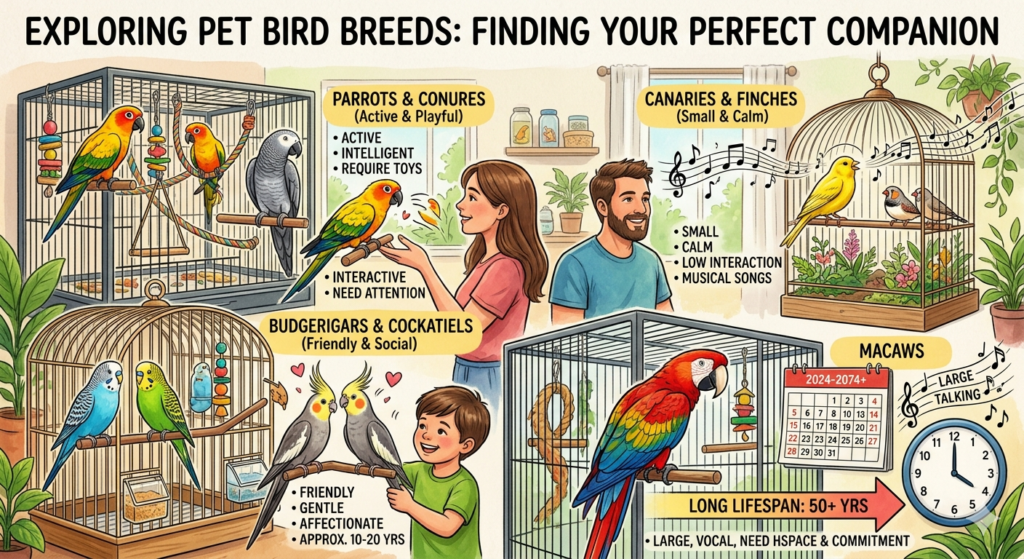
- Consider Your Lifestyle: Active birds like parrots and conures need more attention, while canaries and finches are relatively low-maintenance.
- Space Availability: Larger birds such as macaws need bigger cages and more room to move.
- Experience Level: Beginners may prefer small, friendly birds like budgerigars or cockatiels.
- Personality & Temperament: Choose a breed that matches your interaction style—some birds are social and playful, others are calm and independent.
- Lifespan & Commitment: Some birds, like parrots, can live decades, so consider your long-term commitment.
- Noise Level: Singing birds like canaries or talkative birds like parrots may be noisy, so choose according to your home environment.
Bird Food
Providing the right bird food is essential for their health, energy, and vibrant feathers. Here are some important tips:
- Balanced Diet: Include a mix of seeds, pellets, fruits, and vegetables for complete nutrition.
- Species-Specific Needs: Different birds have different dietary requirements—research your bird’s preferred diet.
- Fresh Water: Always provide clean and fresh water for drinking and bathing.
- Treats & Supplements: Offer occasional treats and necessary supplements like calcium or vitamins.
- Avoid Harmful Foods: Never feed chocolate, avocado, caffeine, or salty foods to birds.
Bird Training
Training your pet birds is not just about discipline—it’s a fun way to bond, keep them mentally active, and enjoy their playful personalities. Here’s how you can make bird training engaging:
- Start Young & Build Trust: Begin training when your bird is young to develop confidence and a strong bond.
- Positive Reinforcement: Reward your bird with treats, praise, and gentle encouragement for good behavior.
- Short, Fun Sessions: Keep training sessions 5–10 minutes to maintain focus and make learning enjoyable.
- Socialize Daily: Gentle handling and interaction with family members helps birds feel comfortable and happy.
- Teach Simple Tricks: Start with fun commands like stepping onto a finger, waving, or ringing a small bell.
- Patience & Consistency: Every bird learns at its own pace—be patient, consistent, and celebrate small wins.
Bird Health
Keeping your pet birds healthy involves proper nutrition, clean living, mental stimulation, and regular observation. Here’s how you can maintain their well-being:
- Balanced Diet: Feed a variety of seeds, pellets, fresh fruits, and vegetables to meet nutritional needs.
- Fresh Water Daily: Always provide clean water for drinking and bathing to prevent dehydration and infections.
- Clean Cage & Toys: Regularly clean the cage, perches, and toys to prevent bacterial and fungal growth.
- Exercise & Flight Time: Allow birds to fly safely in a secure space or provide climbing toys to keep them active.
- Mental Stimulation: Use puzzles, swings, and interactive toys to prevent boredom and stress.
- Monitor Behavior & Appearance: Watch for changes in appetite, droppings, feathers, or energy levels; early detection is key.
- Avoid Harmful Foods & Hazards: Never feed chocolate, avocado, caffeine, or salty foods; keep them away from toxic fumes and open windows.
- Regular Vet Visits: Schedule checkups with an avian vet to catch potential health issues early.