Gmail - piyushjoshi2324@gmail.com
Contact- +91 991779100177

Fish Care Guide
Fish are fascinating and beautiful pets that bring life, color, and calmness to any home. They are low-maintenance compared to some pets but still require proper care to thrive. Whether you are interested in freshwater or saltwater fish, understanding their needs is essential for keeping them healthy and happy.
Fish come in countless species, colors, and sizes, each with unique behavior, habitat preferences, and dietary requirements. Some are easy for beginners, like goldfish and guppies, while others are exotic and challenging, like clownfish or angelfish.
Benefits of Keeping Fish as Pets
Keeping fish is not just beautiful — it also offers many practical and emotional benefits. Here’s why having fish in your home or office can be rewarding:
1. Stress Relief and Relaxation
Watching fish swim calmly in an aquarium helps reduce stress, anxiety, and mental fatigue. The gentle movement of fish and the soothing sound of water create a peaceful environment at home or office. Spending even a few minutes observing your fish daily can boost mood, calm nerves, and improve overall mental well-being.
2. Educational Value
Fishkeeping is a fun and educational hobby that teaches children and beginners about biology, responsibility, and aquatic ecosystems. Observing fish behavior helps understand feeding habits, social interactions, and habitat needs. This makes fishkeeping a practical way to learn about nature while enjoying a relaxing hobby.
3. Low-Maintenance Companions
Many fish species are easy to care for and require minimal daily attention, making them ideal for busy lifestyles. Unlike dogs or cats, fish don’t need walks, but still provide companionship and joy. With proper tank setup, feeding, and water care, fish can thrive for years with simple routine maintenance.
4. Aesthetic Appeal
A well-maintained aquarium adds beauty, color, and life to any room. Watching vibrant fish swim among plants and decorations is visually soothing. Aquariums can be designed creatively, making them a centerpiece in homes, offices, or waiting areas while enhancing interior aesthetics.
5. Health Benefits
Studies show that observing fish can lower blood pressure, heart rate, and stress levels. Fishkeeping promotes a calm, meditative atmosphere that benefits mental and physical health. Even a small home aquarium can improve focus, relaxation, and emotional balance.
Fish Breeds
There are countless fish species kept as pets, each with unique colors, sizes, and care requirements. Understanding the different fish breeds helps beginners choose the right fish for their aquarium and ensures a healthy, thriving tank.
1. Freshwater Fish Breeds
Freshwater fish are generally easier to care for and ideal for beginners. Popular breeds include:
Goldfish – Hardy, colorful, and long-living; need spacious tanks.
Guppies – Small, active, and easy to breed; ideal for community tanks.
Betta Fish (Siamese Fighting Fish) – Vibrant colors and fins; require a calm environment.
These species are perfect for those starting their aquarium journey. Freshwater fish are adaptable, and learning their care helps build confidence before moving to more complex fish types.
2. Saltwater Fish Breeds
Saltwater fish are more exotic and require specialized care. Popular breeds include:
Clownfish – Colorful and hardy; need coral or tank hiding spaces.
Tang Fish (e.g., Blue Tang) – Active swimmers; require a larger tank and good filtration.
Angelfish – Elegant appearance; sensitive to water quality and temperature.
Saltwater fish bring vibrant color and activity to your aquarium but are best for aquarists with some experience.
3. Exotic & Rare Fish
For advanced hobbyists, exotic fish like Discus, Arowana, or Mandarinfish offer unique colors and patterns. These fish need specialized diets, tank setups, and careful attention to water parameters.
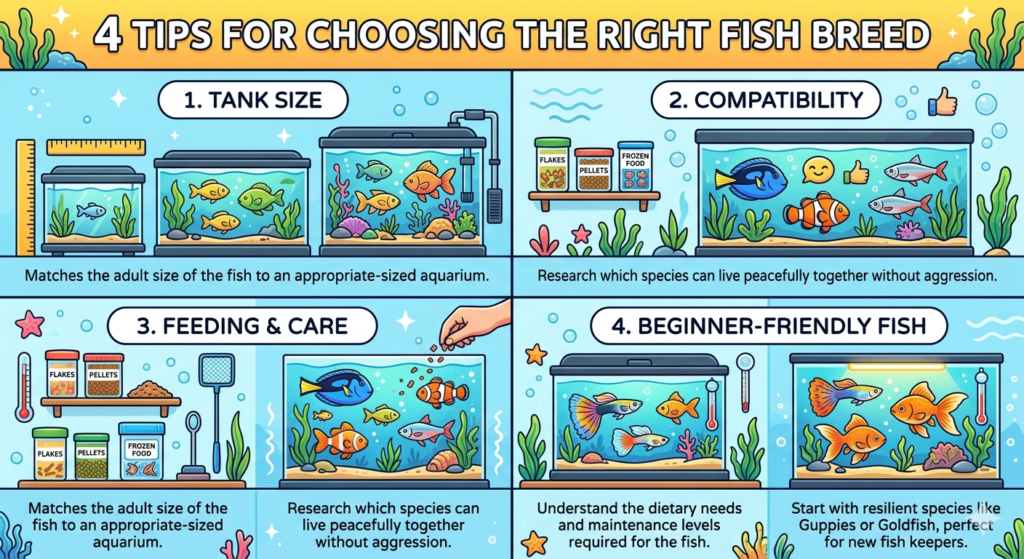
4. Tips for Choosing the Right Breed
Consider tank size and space requirements.
Check compatibility with other fish species.
Understand feeding and care needs before purchase.
Beginners should start with hardy and low-maintenance species.
Fish Food
Providing the right nutrition is essential to keeping your fish healthy, colorful, and active. Different fish species require different types of food, and overfeeding or underfeeding can cause health problems. This guide will help you understand the best food options for your fish and how to feed them properly.
Feeding Tips
Feed small amounts 2–3 times a day. Only give what fish can consume in 2–3 minutes.
Avoid overfeeding; leftover food pollutes the tank and harms water quality.
Rotate food types to provide balanced nutrition and enhance colors.
Observe fish behavior while feeding to notice if any fish is not eating properly.
Special Notes for Different Fish
Betta Fish: Prefer protein-rich flakes or frozen/live food. Avoid overfeeding.
Goldfish: Mainly eat flakes and vegetables; avoid high-protein food as it may affect digestion.
Tropical Fish: Benefit from a mix of flakes, pellets, and occasional live or frozen food.
Fish Health
Maintaining the health of your fish is crucial to keeping them alive, active, and colorful. Healthy fish depend on clean water, proper nutrition, and stress-free environments. Even a small mistake in feeding or tank maintenance can lead to disease. This guide will help you understand common health issues, how to prevent them, and how to treat your fish if problems occur.
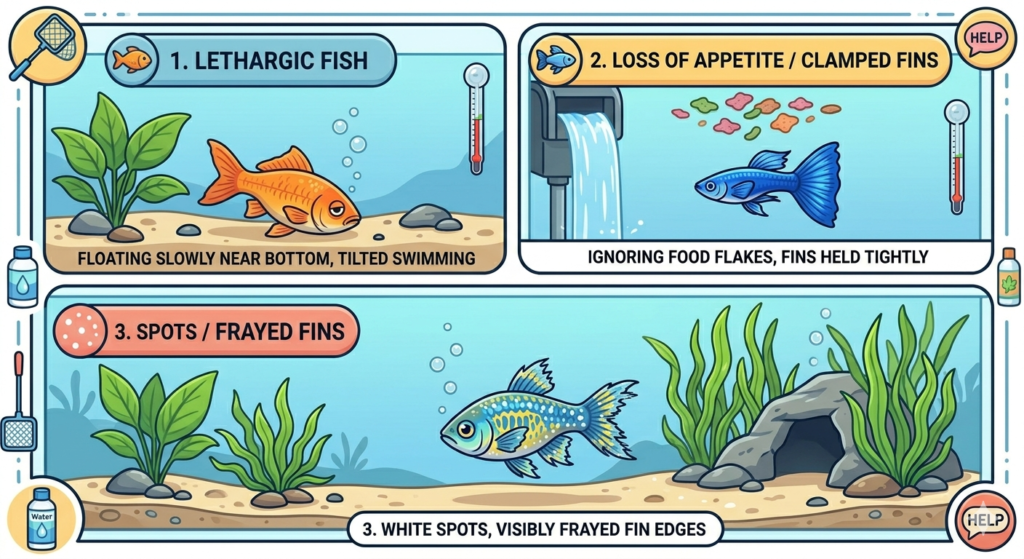
Common signs of unhealthy fish include:
1. Lethargy or unusual swimming patterns
2. Loss of Appetite or Clamped Fins
3. Spots, Discoloration, or Frayed Fins