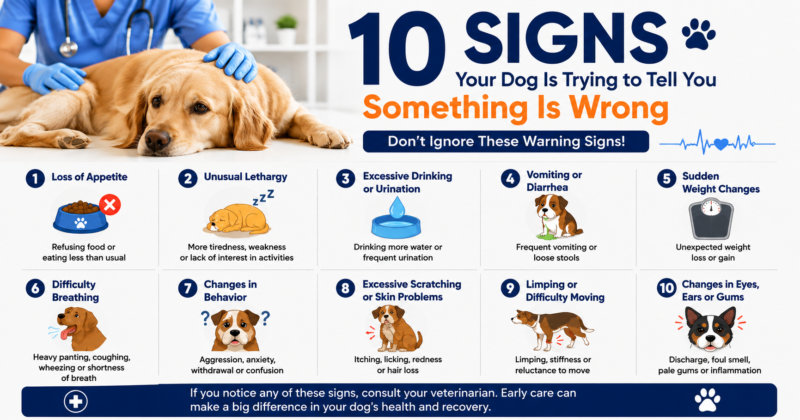
As a pet owner, understanding dog health warning signs can help you identify potential problems before they become serious. Dogs cannot communicate with words, but they often show physical and behavioral changes when they are unwell. Recognizing these signs early and seeking veterinary care can protect your pet’s health and improve recovery outcomes.
Loss of Appetite
One of the most common dog health warning signs is a sudden loss of appetite. If your dog refuses food for more than a day or shows little interest in eating, it may indicate dental problems, digestive issues, infections, or other health conditions.
Unusual Lethargy
A healthy dog is generally alert and active. If your pet becomes unusually tired, sleeps more than usual, or avoids activities they once enjoyed, it could be a sign that something is wrong.
Excessive Drinking or Urination
Drinking significantly more water or urinating frequently may point to conditions such as diabetes, kidney disease, or hormonal imbalances. Monitoring these changes can help detect health issues early.
Vomiting or Diarrhea
Occasional digestive upset is common, but repeated vomiting or persistent diarrhea should never be ignored. These symptoms can lead to dehydration and may be caused by infections, parasites, food intolerance, or more serious illnesses.
Sudden Weight Changes
Unexpected weight loss or weight gain without changes in diet or exercise can indicate underlying medical conditions. Regularly checking your dog’s weight is an important part of preventive care.
Difficulty Breathing
Heavy panting when not exercising, coughing, wheezing, or shortness of breath are serious dog health warning signs that require immediate veterinary attention.
Changes in Behavior
Behavioral changes such as aggression, anxiety, confusion, withdrawal, or excessive clinginess may suggest pain, stress, or neurological problems. Since dogs cannot explain what they are feeling, behavior often provides important clues.
Excessive Scratching or Skin Problems
Constant scratching, licking, redness, hair loss, or irritated skin may result from allergies, parasites, infections, or environmental triggers. Prompt treatment can prevent further discomfort.
Limping or Difficulty Moving
If your dog struggles to stand, limps, avoids jumping, or hesitates to climb stairs, it may be experiencing joint pain, injury, arthritis, or muscle problems.
Changes in Eyes, Ears, or Gums
Cloudy eyes, eye discharge, foul-smelling ears, pale gums, or inflamed tissues can signal infections or other health concerns that should be evaluated by a veterinarian.
Conclusion
Recognizing dog health warning signs is one of the most important responsibilities of a pet owner. Paying attention to changes in appetite, energy levels, behavior, cand physical appearance can help you take action before a condition becomes severe. Regular vet check-ups, proper nutrition, exercise, and a caring environment will help keep your dog healthy and happy for years to come.