
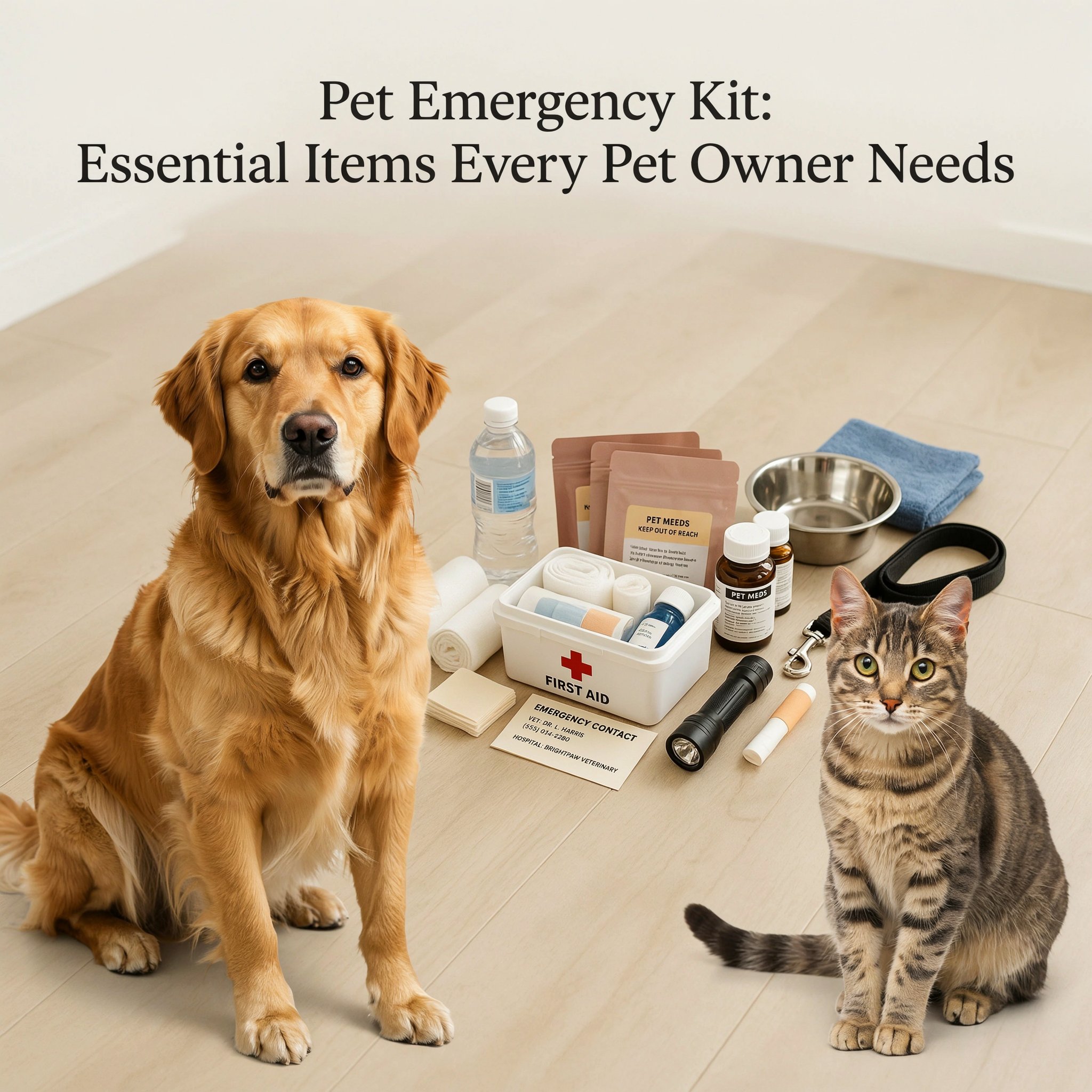
Emergencies can happen at any time, whether it is a natural disaster, accident, power outage, or sudden illness. Having a pet emergency kit ready can help protect your furry friend and ensure they receive proper care when you need it most. A well-prepared pet emergency kit provides peace of mind and helps pet owners respond quickly during unexpected situations.
Why Is a Pet Emergency Kit Important?
Pets depend on their owners for safety and care. During emergencies, access to food, water, medication, and veterinary services may be limited. A properly stocked pet emergency kit can help keep your pet comfortable, healthy, and secure until normal conditions return.
Essential Items for a Pet Emergency Kit
Food and Water Supply
Keep at least a 3 to 7-day supply of pet food and clean drinking water in your emergency kit.
Include:
- Dry or canned pet food
- Bottled water
- Food and water bowls
- Manual can opener (for canned food)
Pet First Aid Kit
A pet first aid kit is one of the most important parts of any pet emergency kit.
Include:
- Sterile gauze pads
- Bandages
- Adhesive tape
- Antiseptic wipes
- Cotton balls
- Tweezers
- Disposable gloves
- Digital thermometer
- Pet-safe wound cleaner
3. Medications and Medical Records
Store essential medications and copies of medical records in a waterproof container.
- Vaccination records
- Medical history
- Prescription information
- Veterinarian contact details
- Emergency clinic phone numbers
4. Identification and Safety Items
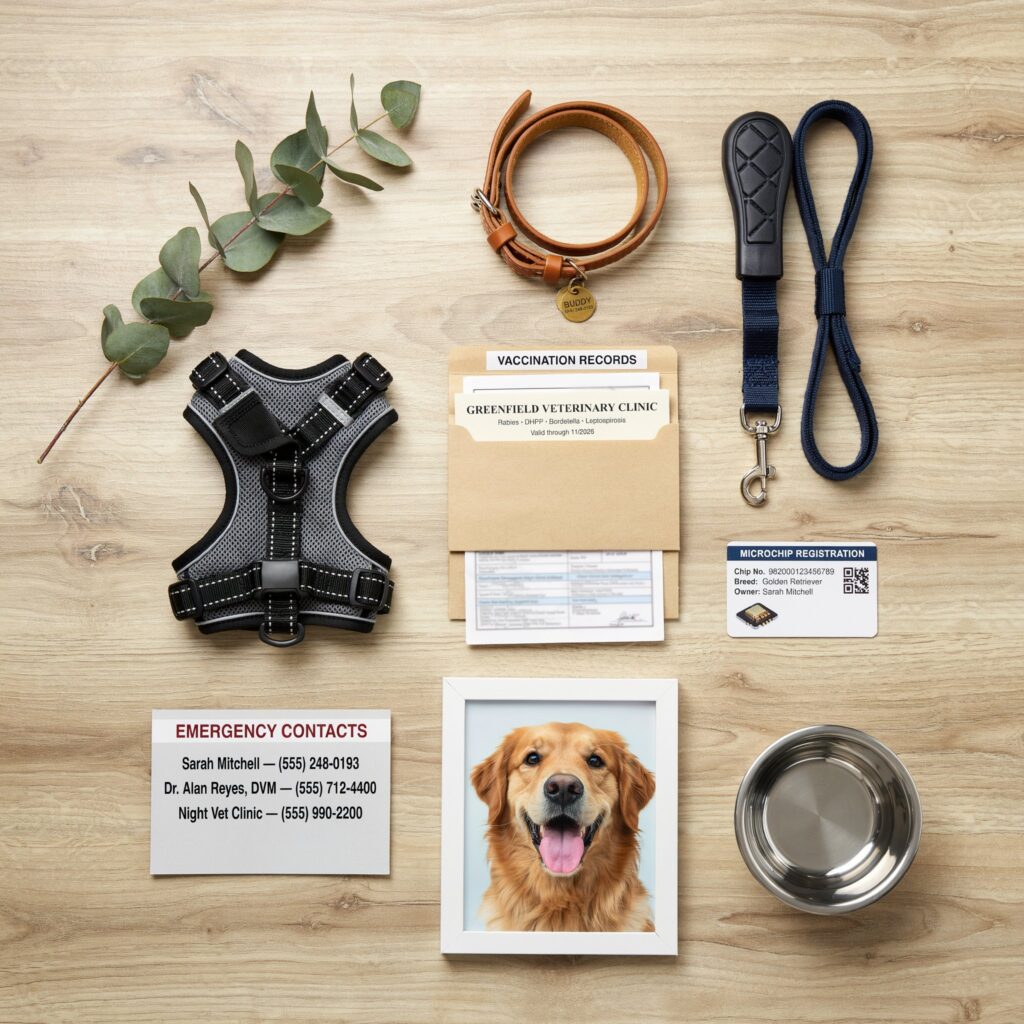
Proper identification can help reunite you with your pet if you become separated during an emergency.
- Include:
- Collar with ID tag
- Recent pet photographs
- Microchip information
- Extra leash
- Harness
5. Comfort and Shelter Supplies
Familiar items can reduce stress and anxiety for pets during emergencies.
- Pack:
- Blanket
- Favorite toy
- Pet bed
- Towels
- Waste bags
6. Hygiene Supplies
Maintaining cleanliness is important, especially if you need to stay away from home for several days.
Include:
Cleaning supplies
Waste disposal bags
Litter and litter tray (for cats)
Paper towels
Pet wipes
7. Emergency Contact List
Keep a written list of important contacts.
Include:
- Regular veterinarian
- Emergency veterinary hospital
- Pet boarding facility
- Family members or trusted friends
- Local animal shelters
Tips for Maintaining Your Pet Emergency Kit
- Check supplies every six months.
- Replace expired food and medications.
- Update vaccination and medical records regularly.
- Adjust the kit according to your pet’s age and health needs.
- Store the kit in an easily accessible location.
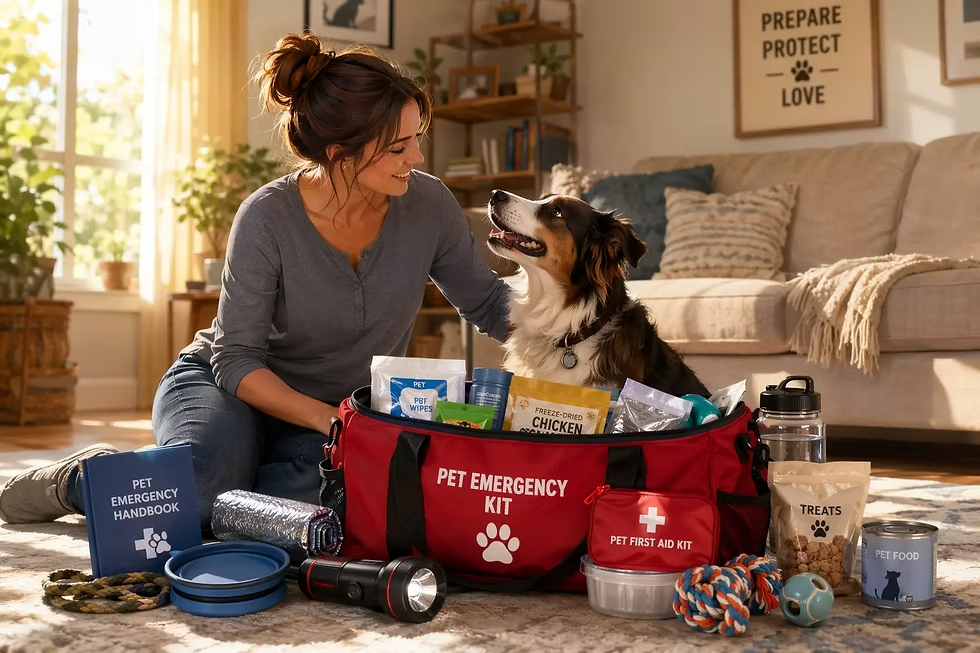
Common Mistakes to Avoid
- Forgetting prescription medications.
- Not updating contact information.
- Storing expired food or water.
- Keeping the kit in a hard-to-reach area.
- Not including identification documents.
FAQ Schema Content
Q: What should be included in a pet emergency kit?
A: A pet emergency kit should include food, water, medications, first aid supplies, identification documents, medical records, and comfort items.
Q: How long should a pet emergency kit supply last?
A: Experts recommend keeping at least 3 to 7 days of food, water, and essential supplies.
Q: How often should I update my pet emergency kit?
A: Check and update the kit every six months to replace expired items and update records.
Q: Why is a pet emergency kit important?
A: It helps ensure your pet’s safety, health, and comfort during disasters, accidents, or other emergencies.
Q: Can I use a human first aid kit for my pet?
A: Some items can be used, but a dedicated pet first aid kit is recommended because pets may require specific medical supplies and treatments.