
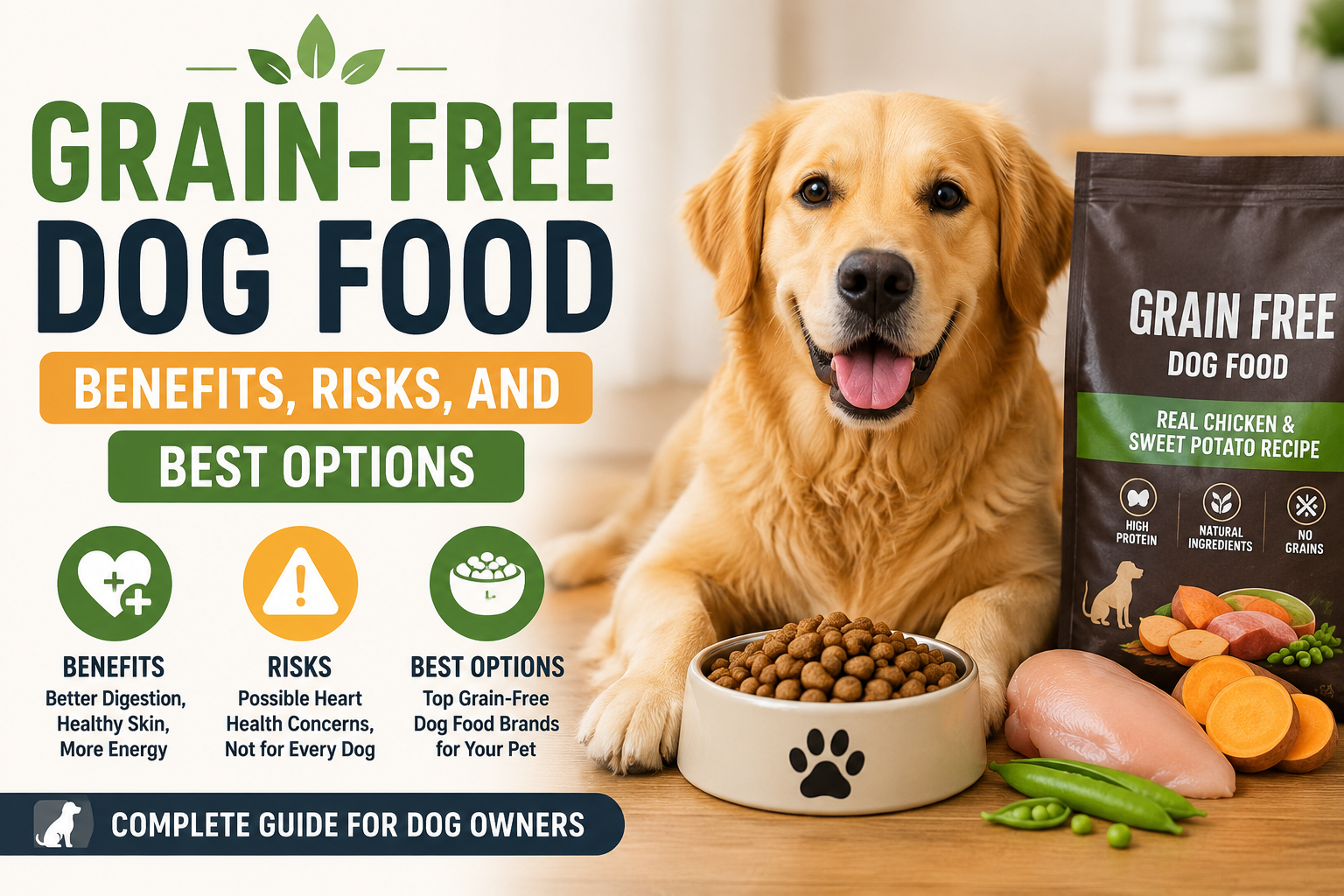
Choosing the right food for your dog is one of the most important decisions for their health. In recent years, grain-free dog food has become increasingly popular among pet owners. Many people believe it is a healthier option, especially for dogs with allergies or sensitive digestion. However, grain-free diets may not be suitable for every dog.
In this guide, we’ll explore the benefits, potential risks, and the best grain-free dog food options available for your pet.
What Is Grain-Free Dog Food?

Grain-free dog food is formulated without common grains such as:
- Wheat
- Corn
- Rice
- Barley
- Oats
Instead, these foods use alternative carbohydrate sources like:
- Sweet potatoes
- Peas
- Lentils
- Chickpeas
- Potatoes
Most grain-free formulas also contain a higher percentage of animal-based protein.
Benefits of Grain-Free Dog Food
1. May Help Dogs with Grain Sensitivities
Some dogs experience digestive discomfort or skin issues after consuming certain grains. Grain-Free Dog Food may help reduce these symptoms by providing an alternative diet that is easier for some dogs to digest. Common signs that your dog may benefit from Grain-Free Dog Food include:
- Itchy skin
- Excessive scratching
- Digestive upset
- Ear infections
2. Supports Healthy Digestion
Many grain-free formulas contain easily digestible ingredients, making them suitable for dogs with sensitive stomachs.
3. Higher Protein Content
Premium grain-free dog foods often contain more meat-based protein, which helps support:
- Muscle development
- Energy levels
- Overall health
4. Improved Skin and Coat Health
The high-quality proteins and healthy fats found in many grain-free foods can contribute to a shinier coat and healthier skin.
Potential Risks of Grain-Free Dog Food
1. Not Necessary for Most Dogs
Most dogs can digest grains without any problems. Whole grains provide valuable nutrients, fiber, and energy.
2. Possible Heart Health Concerns
The U.S. FDA has investigated a possible link between certain grain-free diets and a heart condition known as Dilated Cardiomyopathy (DCM). While research is ongoing, pet owners should consult their veterinarian before making major dietary changes.
3. Can Be More Expensive
Grain-free dog food is often priced higher than traditional dog food because of its premium ingredients.
Best Grain-Free Dog Food Options
1. Orijen Original Dog Food
Key Features:
- High meat content
- Grain-free formula
- Rich in protein
- Suitable for active dogs
2. Farmina N&D Grain-Free
Key Features:
- Premium ingredients
- No artificial preservatives
- Balanced nutrition
- Excellent digestibility
3. Acana Grain-Free Dog Food
Key Features:
- Fresh animal ingredients
- Grain-free recipe
- Suitable for all breeds
4. Taste of the Wild
Key Features:
- Unique protein sources
- Grain-free formulation
- Added probiotics for digestion
Is Grain-Free Dog Food Right for Your Dog?
Grain-free dog food may be a good choice if your dog:
- Has confirmed grain allergies
- Experiences digestive issues related to grains
- Has been recommended a grain-free diet by a veterinarian
However, if your dog is healthy and thriving on a balanced diet that includes grains, there may be no need to switch.
How to Transition to Grain-Free Dog Food
If you decide to change your dog’s diet, do so gradually over 7–10 days:
| Day | Old Food | New Food |
|---|---|---|
| 1–3 | 75% | 25% |
| 4–6 | 50% | 50% |
| 7–8 | 25% | 75% |
| 9–10 | 0% | 100% |
A slow transition helps prevent digestive upset.
Frequently Asked Questions
Is grain-free dog food better than regular dog food?
Not necessarily. The best diet depends on your dog’s individual health needs and nutritional requirements.
Can puppies eat grain-free dog food?
Some puppies can, but it is important to choose a formula designed specifically for growing dogs and consult your veterinarian.
Does grain-free dog food help with allergies?
It may help if your dog has a confirmed grain sensitivity, but many dog allergies are actually caused by proteins rather than grains.
Conclusion
Grain-Free Dog Food can offer benefits for dogs with specific dietary sensitivities, but it is not automatically better for every pet. Before switching, consider your dog’s health, consult a veterinarian, and choose a high-quality brand with balanced nutrition. The right diet can help your dog maintain healthy digestion, strong muscles, and a happy, active life.