
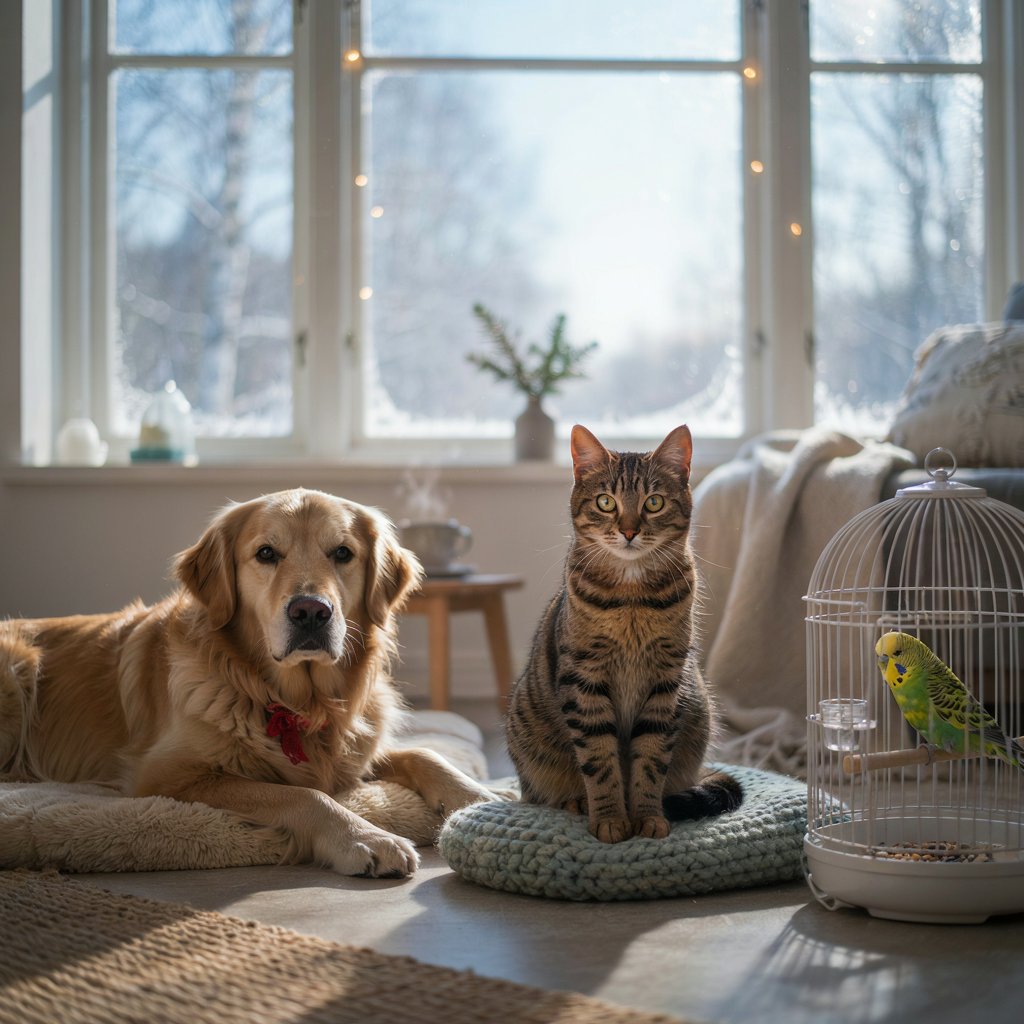
Winter can be challenging for pets, especially when temperatures drop significantly. Dogs, cats, and birds can all be affected by cold weather, although the problems and signs may be different for each animal.
As a responsible pet owner, understanding winter pet care is important to keep your pets warm, comfortable, and healthy throughout the cold season. Proper cold weather pet care can help reduce the risk of problems caused by low temperatures.
In this guide, we will discuss common winter problems in dogs, cats, and birds, along with simple ways to protect them during winter.
How Does Cold Weather Affect Pets?
Cold temperatures can affect pets in several ways. Animals with short hair, very young pets, older pets, and pets with existing health problems may be more sensitive to cold weather.
Common signs that a pet may be feeling too cold include:
- Shivering or trembling
- Sleeping more than usual
- Trying to find warm places
- Cold ears, paws, or body
- Reduced activity
- Weakness or unusual behavior
- Changes in appetite
If your pet shows severe weakness, difficulty breathing, loss of consciousness, or other serious symptoms, contact a veterinarian immediately.
Common Winter Problems in Dogs
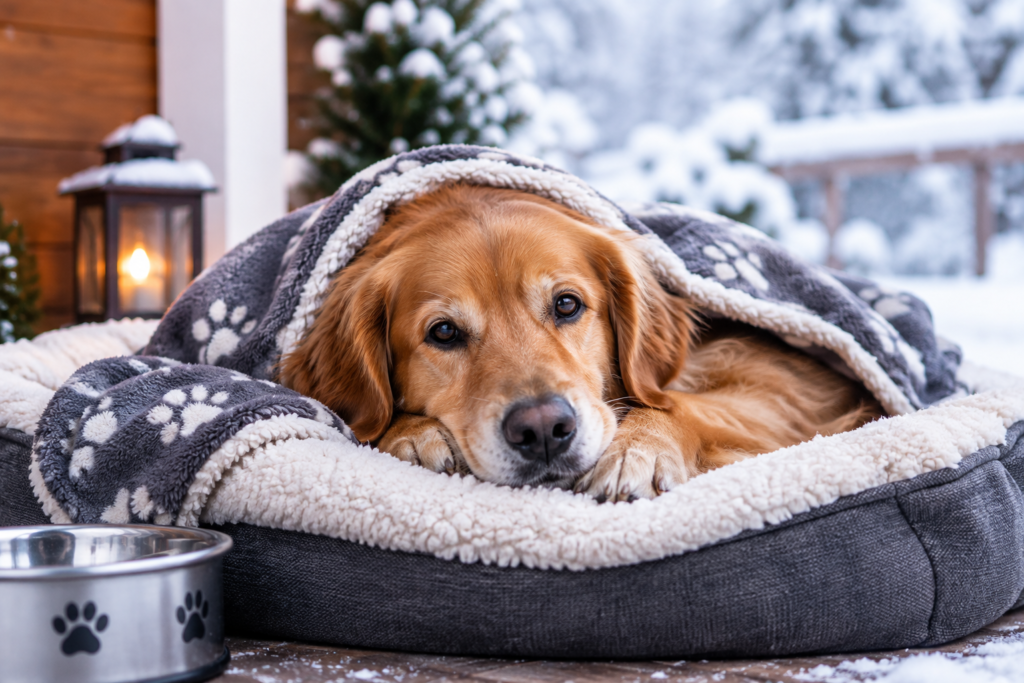
Dogs have different levels of tolerance to cold depending on their breed, age, size, coat, and overall health. Good pet care in winter can help dogs remain comfortable and active.
1. Hypothermia
Hypothermia happens when a dog’s body temperature becomes dangerously low. Prolonged exposure to very cold weather can increase the risk.
Possible signs include:
- Shivering
- Weakness
- Confusion
- Slow movement
- Pale or cold skin
- Extreme tiredness
If you suspect hypothermia, move the dog to a warm place and contact a veterinarian.
2. Dry and Cracked Paws
Cold weather, dry air, and walking on rough or cold surfaces can make a dog’s paw pads dry and cracked.
After outdoor walks, check your dog’s paws and clean them gently. Keeping the sleeping area warm and dry can also help.
3. Respiratory Problems
Cold air may be uncomfortable for some dogs, particularly puppies, older dogs, and dogs with existing respiratory conditions.
Avoid unnecessarily long walks in extremely cold weather and watch for coughing or breathing difficulties.
4. Joint Stiffness
Older dogs may experience increased stiffness during cold weather. They may be less willing to walk, climb stairs, or play.
A warm sleeping area and gentle activity can help keep them comfortable.
Common Winter Problems in Cats
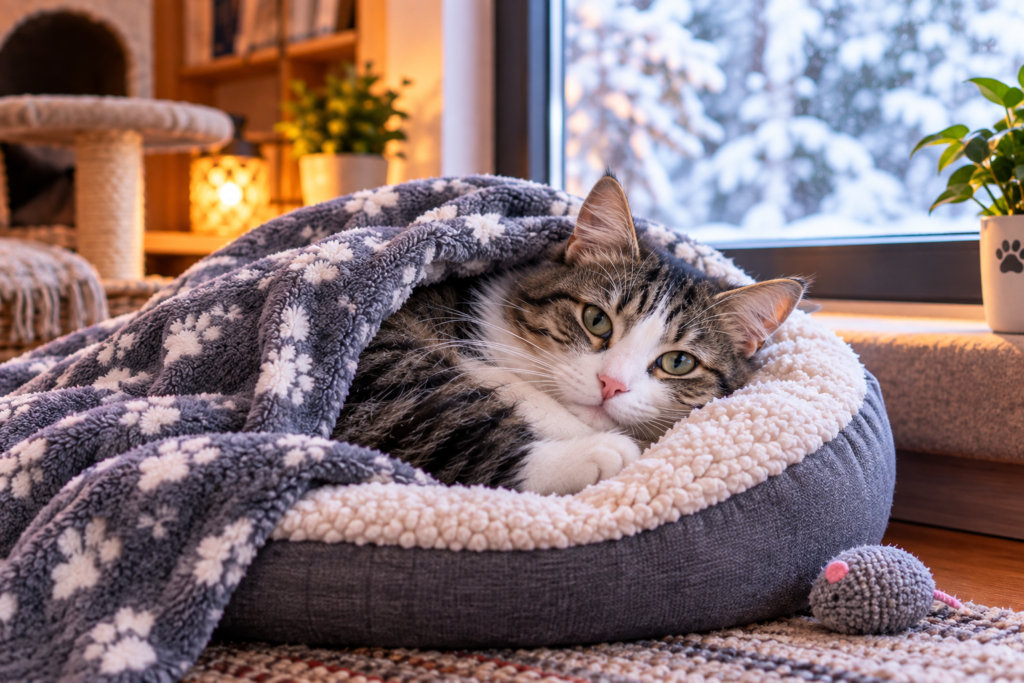
Cats often look for warm places during winter, but they can still be affected by cold temperatures.
1. Hypothermia
Cats exposed to very cold temperatures for long periods can develop hypothermia.
Signs may include:
- Shivering
- Weakness
- Cold body
- Slow movement
- Unusual sleepiness
Keep cats indoors during extremely cold weather whenever possible.
2. Dry Skin
Low humidity during winter can contribute to dry or flaky skin in some cats.
Providing fresh water and maintaining a comfortable indoor environment may help support healthy skin.
3. Cold and Respiratory Issues
Cold weather can be particularly uncomfortable for cats with existing respiratory problems.
Watch for symptoms such as frequent coughing, sneezing, nasal discharge, or difficulty breathing. Persistent or severe symptoms should be checked by a veterinarian.
4. Less Physical Activity
Cats may become less active during winter and spend more time sleeping.
Encourage gentle indoor play to help them remain active and maintain a healthy weight.
Common Winter Problems in Birds
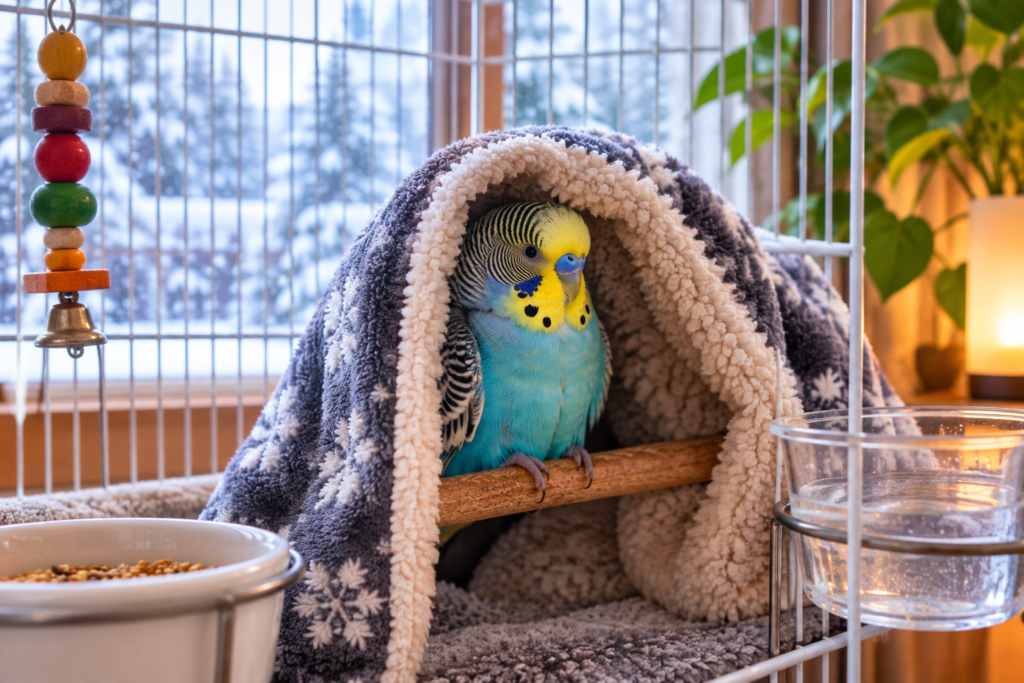
Birds can be especially sensitive to sudden temperature changes. Pet birds such as parrots, budgies, cockatiels, and finches need a stable and comfortable environment during winter.
1. Cold Stress
Birds may become stressed when exposed to low temperatures or cold drafts.
Signs can include:
- Fluffed-up feathers for long periods
- Shivering
- Reduced activity
- Sleeping more than usual
- Reduced appetite
If these signs continue, consult an avian veterinarian.
2. Respiratory Problems
Cold drafts and sudden temperature changes can make respiratory problems more concerning in birds.
Keep the cage away from direct drafts, open windows, and cold air coming from outside.
3. Reduced Appetite
Some birds may eat less when they are stressed or unwell. A sudden or significant change in appetite should not be ignored.
Make sure fresh food and clean drinking water are available every day.
4. Dry Environment
Indoor heating can make the air dry. Very dry conditions may affect a bird’s comfort and feathers.
Maintaining a comfortable indoor environment and following appropriate bird-care practices can help.
How to Keep Dogs, Cats and Birds Safe in Winter
Following some basic winter care for pets can help protect dogs, cats, and birds from cold-weather problems.
1. Provide a Warm Sleeping Area
Give your pet a clean, dry, and comfortable place to sleep. Keep the bed away from cold floors and direct drafts.
For Care of Pet, maintaining a safe and comfortable sleeping environment is one of the simplest ways to protect pets during winter.
2. Avoid Sudden Temperature Changes
Try to maintain a reasonably stable indoor temperature. Avoid moving pets suddenly between very warm and very cold environments.
3. Check Their Paws and Feet
For dogs and cats, regularly check their paws for dryness, cracks, or irritation.
For birds, make sure their feet and perches remain clean and comfortable.
4. Keep Fresh Water Available
Pets still need proper hydration during winter. Check their water regularly and make sure it is clean and easily accessible.
5. Maintain a Healthy Diet
A balanced diet provides important nutrients for maintaining overall health. Avoid making major dietary changes without appropriate veterinary advice.
6. Keep Birds Away From Cold Drafts
Place bird cages in a safe indoor location away from open windows, doors, and direct cold air.
Never cover a bird’s cage in a way that prevents proper ventilation.
7. Continue Exercise and Mental Stimulation
Dogs and cats still need physical activity during winter. When outdoor conditions are safe, continue regular walks and play.
For cats and birds, indoor toys and activities can provide useful mental stimulation.
When Should You Contact a Veterinarian?
Cold-weather problems can sometimes become serious. Contact a veterinarian if your pet shows symptoms such as:
- Severe or continuous shivering
- Extreme weakness
- Difficulty breathing
- Unusual unresponsiveness
- Loss of appetite that continues
- Persistent coughing or other respiratory symptoms
- Very cold body or extremities
- Sudden major changes in behavior
Do not rely only on home remedies when your pet appears seriously ill.
Winter Pet Care Tips for a Healthy Season
Good winter pet care is not only about keeping pets warm. It also involves monitoring their food, water, activity, sleeping environment, and behavior.
Every pet has different needs. A healthy adult dog may tolerate cold weather differently from a small puppy, while birds may be more sensitive to drafts and sudden temperature changes.
Regular observation and proper Care of Pet can help you identify unusual changes early and provide the right support when needed.
Final Thoughts
Winter can be a comfortable season for pets when they receive proper care and protection. Dogs, cats, and birds all have different needs, so it is important to pay attention to their behavior and environment.
Providing a warm and dry resting place, clean water, a healthy diet, safe activity, and protection from extreme cold can help your pet stay comfortable throughout winter.
The basic goal of Care of Pet during winter is simple: keep your pets warm, safe, hydrated, active, and under regular observation.
Most importantly, observe your pet every day. If you notice unusual or serious symptoms, consult a veterinarian rather than trying to treat the problem yourself.
A little extra care during winter can make a big difference to your pet’s comfort and well-being.